MAE-West
A Silicon Valley internet exchange point running between downtown San Jose and Moffett Field.
MAE-West was an internet exchange point serving the west coast of the United States from Silicon Valley. Set up in November 1994, it linked two sites with a dual FDDI ring and, during the 1990s under MCI Worldcom, ranked as the second busiest exchange on the internet, carrying an estimated 40% of national traffic.
- Opened November 1994 in Silicon Valley, California
- Two sites linked by a dual FDDI ring, 12 miles (19 km) apart
- Handled an estimated 40% of US internet traffic in the 1990s
- Second busiest exchange point on the internet at that time
- Facilities run by CoreSite as of 2023
What it is
MAE-West was an internet exchange point on the American west coast, based in Silicon Valley in the southern San Francisco Bay Area of California. It opened in November 1994 and let networks swap traffic with one another locally instead of sending it across long distances. The exchange spanned two sites joined by a dual Fiber Distributed Data Interface ring, a fibre-based networking standard of that era. One site sat in downtown San Jose and was run by Metropolitan Fiber Systems, mainly for smaller networks. The other was at NASA's Moffett Field, about 12 miles (19 km) to the northwest, and served larger networks. In the 1990s MCI Worldcom ran it and it stood as the second busiest exchange on the internet.
How it came about
The exchange began operating in November 1994. Its full name is Metropolitan Area Exchange, West, chosen partly as a joke about the actress Mae West and partly to echo the earlier MAE in the Washington, D.C. area, which then became known as MAE-East. Steven Feldman built the MFS side, while Bobby Cates and Lance Tatman put together the NASA side. Through the 1990s the exchange was run by MCI Worldcom and grew into one of the busiest meeting points on the internet. By 2023 its facilities were in the hands of CoreSite.
The building and the halls
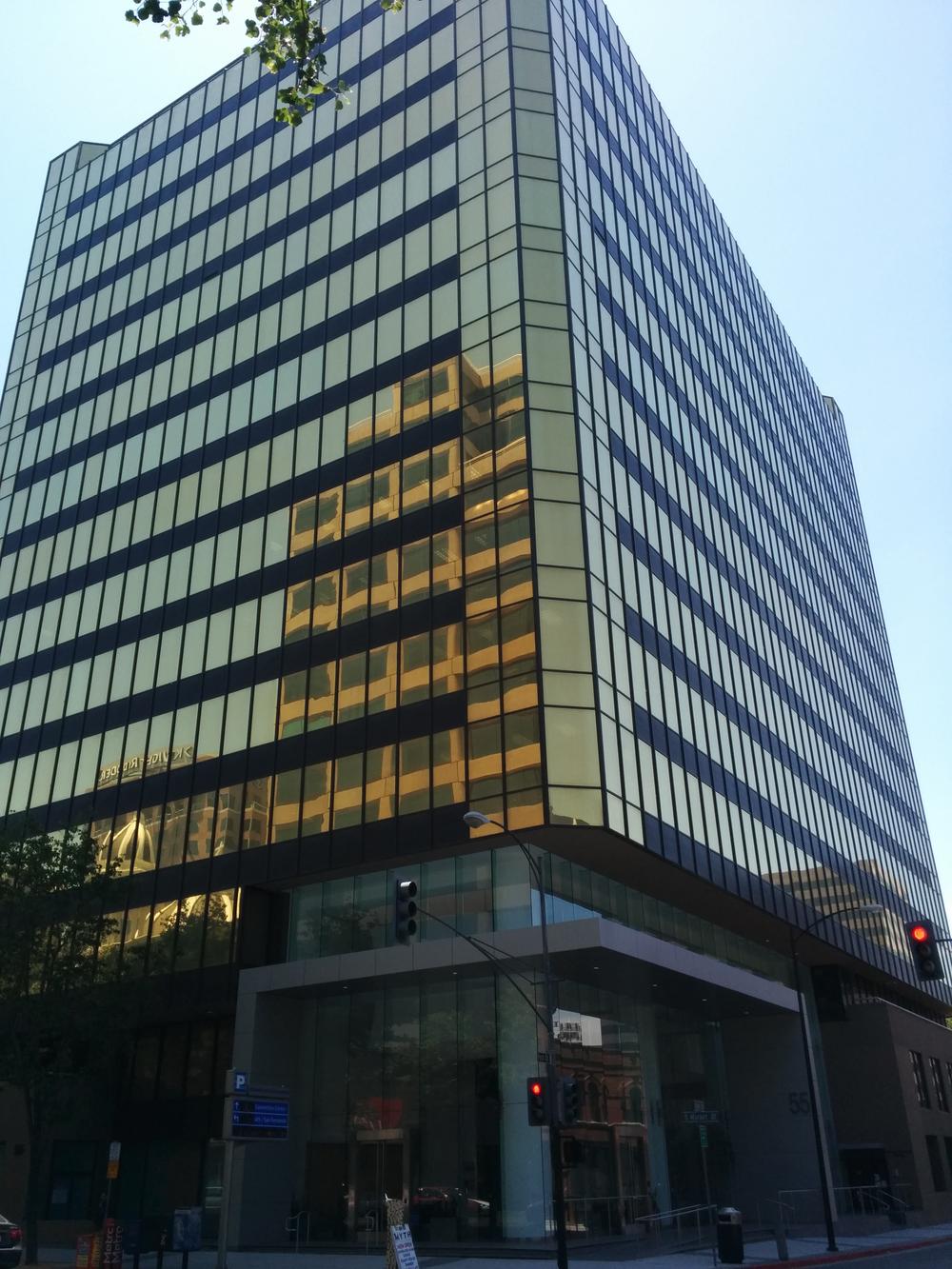
The San Jose half of the exchange sat inside Market Post Tower at 55 South Market, on the corner of Post Street in the city centre. That tower, finished in 1985 and nicknamed the Gold Building, rises 15 storeys. The second site was a NASA facility at Moffett Field, roughly 12 miles (19 km) northwest. The two were tied together by a dual FDDI ring, bridged across the gap so that networks at either end could reach each other. Access rules differed between the pair: the MFS side offered monthly terms and a service level agreement, while the NASA side required annual commitments and applied stricter entry policies.
What runs inside
Networks came to MAE-West to exchange internet traffic with each other. The downtown San Jose site, run by Metropolitan Fiber Systems, was aimed mainly at smaller providers, whereas the NASA location at Moffett Field drew larger networks because of its annual terms and tighter access rules. During the 1990s, with MCI Worldcom in charge, the exchange was reckoned by some estimates to carry as much as 40% of all internet traffic in the country, making it the second busiest exchange point anywhere on the network.
The place
The exchange sat in Silicon Valley, in the southern part of the San Francisco Bay Area, a region dense with technology firms and network operators. Its two sites lay in downtown San Jose and at Moffett Field, a NASA field about 12 miles (19 km) northwest of the city centre. Housing one side in Market Post Tower placed it among the office buildings of central San Jose, close to the fibre and business activity of the area.
Network and links
MAE-West connected to the Ames Internet Exchange, which NASA ran at the Ames Research Center. The link between them used two OC3c circuits, running straight between the FDDI switches at each end. OC3c is a fibre transmission rate of about 155 megabits per second. As a major exchange point, MAE-West also served as a place where many networks peered, or agreed to pass each other's traffic directly.
Questions people ask about MAE-West
What was MAE-West?
It was an internet exchange point in Silicon Valley where networks met to pass traffic between each other. It opened in November 1994 and operated across two linked sites, one in downtown San Jose and one at NASA's Moffett Field, about 12 miles (19 km) away.
Who ran it?
Metropolitan Fiber Systems operated the downtown San Jose site and NASA ran the Moffett Field site. MCI Worldcom ran the exchange overall during the 1990s. By 2023 the facilities were operated by CoreSite.
Why did the name sound like a person?
The full name is Metropolitan Area Exchange, West. It doubled as a joke about the actress Mae West, and it echoed the earlier MAE in the Washington, D.C. area, which was renamed MAE-East once this western exchange appeared.
How much traffic did it carry?
During the 1990s it was the second busiest exchange point on the internet. Some estimates put the share of United States internet traffic passing through it as high as 40%.
How were the two sites connected?
A dual Fiber Distributed Data Interface ring bridged the San Jose and Moffett Field locations. The exchange also linked to the Ames Internet Exchange at NASA's Ames Research Center over two OC3c circuits running between the FDDI switches at each end.
Good reading and sources
The facts on this page come from the Wikipedia article "MAE-West", written by its contributors and used under the CC BY-SA 4.0 licence, and from its Wikidata record (CC0). EveryDatacenter rewrote the text in its own words, with AI assistance, and compares every page with the article to make sure no passage is copied. It may be reused under the same CC BY-SA 4.0 licence with a link back.
It may contain mistakes, and figures change over time. Nothing here is investment or buying advice. If something is wrong, tell us. Last refreshed 2026-11-14.
Like MAE-West
All carrier hotels and exchanges 🇳🇱 NetherlandsAmsterdam Internet Exchange
A major neutral internet exchange point based in Amsterdam, Netherlands.Interconnection · 1994
 🇬🇧 United Kingdom and 1 moreLondon Internet Exchange
A UK-based internet exchange point facilitating network traffic peering.Interconnection · Grid power · 1994
🇫🇮 FinlandFICIX
Finland's first and largest internet exchange point, running three sites and three root nameservers.Interconnection · 1993
🇨🇦 CanadaMontreal Internet Exchange
Not-for-profit peering fabric linking networks across Montreal data centresInterconnection · 1995
More from MCI Worldcom
All of them 🇺🇸 United StatesCoreSite
US operator of carrier-neutral data centres offering colocation and peeringColocation · Grid power · 2001
 🇺🇸 United StatesTower 55
Carrier-neutral telecom hub and internet exchange in downtown San Jose.Interconnection · 1984
 🇺🇸 United StatesNASA Advanced Supercomputing Division
NASA's supercomputing centre at Ames Research Center in Mountain View, California.Supercomputer centre · Grid power · 1982