
CINECA
Italian supercomputing consortium for research and universities
CINECA is a non-profit consortium established in 1969 to provide high-performance computing for Italian science. It operates the nation's most powerful supercomputers, supporting universities, public research centres and government ministries with advanced computational resources.
- Established in July 1969 in Casalecchio di Reno
- Consortium of 69 universities and 27 research centres
- Hosted Marconi100, ranked 18th globally in 2021
- Merged with CILEA and Caspur consortia
- Supports Italian Ministry of Universities and Research
What it is
CINECA is a non-profit consortium that serves as the primary supercomputing centre for scientific research in Italy. Founded in 1969, it brings together sixty-nine universities and twenty-seven national public research centres. The organisation also includes the Italian Ministry of Universities and Research and the Ministry of Education. Its main goal is to support the scientific community through high-performance computing and visualisation tools. Beyond pure research, it provides management systems for university administrations and designs information technology solutions for public bodies and private firms.
How it came about
The consortium was established in July 1969 in Casalecchio di Reno, near Bologna. In the late 1980s, it expanded its mission beyond supercomputing to include administrative services for universities and information exchange systems for the national academic sector. It later merged with two other high-performance computing groups, CILEA and Caspur, to become the central reference for technology innovation in the country. This consolidation allowed it to support the entire higher education and research system more effectively.
The building and the halls
The headquarters are located in Casalecchio di Reno, within the Bologna metropolitan area. The organisation maintains a presence in several other major Italian cities, including Milan, Rome, Naples and Chieti. These locations host the infrastructure and staff needed to deliver services across the nation. The facility houses significant supercomputing hardware, such as the Fermi IBM Blue Gene/Q system installed in 2012 and the Marconi100 cluster.
Power and cooling
Specific details on power capacity, energy sources or cooling methods are not provided in the available records. The centre focuses on delivering computational performance rather than publishing infrastructure metrics like power usage effectiveness. It hosts some of the most powerful machines in the country, including systems ranked highly on global lists for scientific computing capability.
What runs inside
The primary users are researchers from member universities and national public research centres. It supports projects in fields such as bioinformatics, grid computing and digital content. The consortium also serves public administration bodies and private enterprises by transferring technology and providing custom information systems. It participates in European Union-funded projects to promote transnational access to supercomputing resources.
The place
Based in the Emilia-Romagna region, the centre benefits from proximity to major academic institutions in Bologna. Its multi-city presence allows it to serve the national research network effectively. The location in Casalecchio di Reno places it within a well-connected industrial and academic hub in northern Italy, facilitating collaboration with both local and international partners.
Environment and impact
CINECA plays a critical role in maintaining Italy's competitiveness in scientific research by providing access to world-class supercomputing resources. It supports the national higher education system and helps bridge the gap between academic research and practical applications in public administration and industry. Its participation in European projects enhances cross-border scientific cooperation.
Network and links
The consortium is part of ELIXIR Italy and engages in European research networks. It facilitates the exchange of information between the Ministry of Universities and Research and the national academic system. Its involvement in EU-funded initiatives promotes transnational access to supercomputing centres, linking Italian researchers with broader European infrastructure.

Questions people ask about CINECA
Who owns and runs CINECA?
It is a non-profit consortium owned by sixty-nine Italian universities, twenty-seven national public research centres, and two government ministries. It operates as a shared resource for the national scientific community.
What supercomputers are hosted there?
Notable systems include the Fermi IBM Blue Gene/Q and Marconi100. The latter was ranked eighteenth on the TOP500 list in November 2021, delivering around thirty petaflops of performance.
Does it only serve universities?
No. While its core mission supports scientific research, it also provides management systems for university administrations, designs ICT solutions for public administration, and offers services to private enterprises.
Good reading and sources
The facts on this page come from the Wikipedia article "CINECA", written by its contributors and used under the CC BY-SA 4.0 licence, and from its Wikidata record (CC0). EveryDatacenter rewrote the text in its own words, with AI assistance, and compares every page with the article to make sure no passage is copied. It may be reused under the same CC BY-SA 4.0 licence with a link back.
It may contain mistakes, and figures change over time. Nothing here is investment or buying advice. If something is wrong, tell us. Last refreshed 2026-11-14.
Like CINECA
All supercomputer centres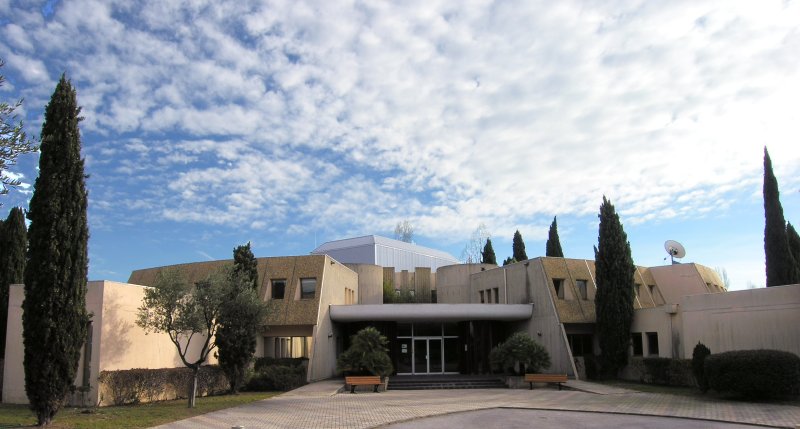 🇫🇷 FranceCINES
French national supercomputing and digital archiving centre in Montpellier.Supercomputer centre · Grid power · 1980
 🇦🇺 AustraliaNational Computational Infrastructure
High-performance computing and data services at the Australian National University.Supercomputer centre · 2007
 🇨🇳 ChinaNational Supercomputing Center in Guangzhou
Chinese national supercomputing centre in Guangzhou housing Tianhe-3.Supercomputer centre · Grid power · 2014
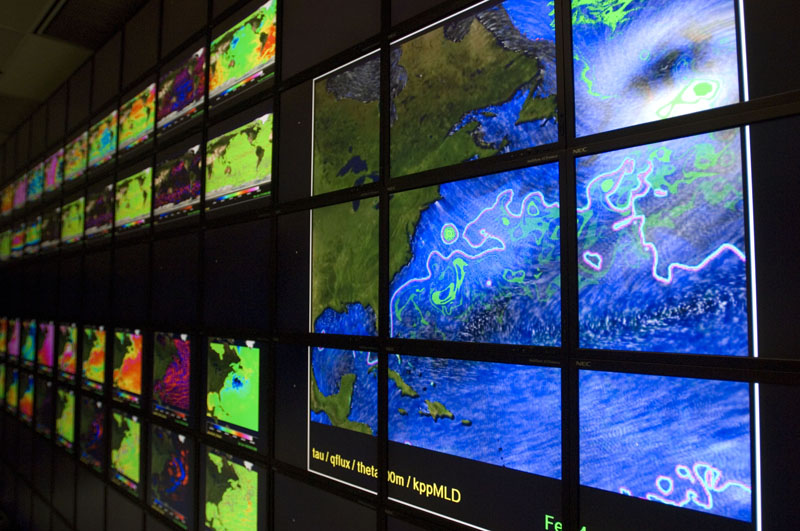 🇺🇸 United StatesNASA Advanced Supercomputing Division
NASA's supercomputing centre at Ames Research Center in Mountain View, California.Supercomputer centre · Grid power · 1982