Holland Computing Center
High-performance computing core for the University of Nebraska system.
The Holland Computing Center serves as the high-performance computing hub for the University of Nebraska system. It operates facilities in Lincoln and Omaha, providing supercomputing resources like Crane and cloud services for scientific research across various disciplines.
- Crane supercomputer ranked 474th in TOP500 upon implementation.
- Supports LIGO gravitational wave discovery research.
- Operates in both Lincoln and Omaha university facilities.
- Anvil cloud platform uses OpenStack architecture.
- Named after businessman and donor Richard Holland.
What it is
The Holland Computing Center acts as the central high-performance computing resource for the University of Nebraska system. It maintains facilities at the University of Nebraska–Lincoln and the University of Nebraska Omaha. The center provides hardware and services for scientific inquiry, including supercomputers and cloud infrastructure. Named after donor Richard Holland, it supports diverse academic fields through advanced computational tools.
How it came about
The center evolved from early clusters like Bugeater and RCF in the late 1990s. Notable systems such as Prairiefire and Firefly achieved TOP500 rankings in the early 2000s. Subsequent generations included Sandhills, Tusker, and Merritt. In 2013, the Crane supercomputer was implemented, later receiving upgrades in 2017. Rhino replaced older systems in 2019, integrating components from previous clusters to maintain modern capabilities for researchers.
The building and the halls
Operations span two primary sites within the university system. One location is housed in the June and Paul Schorr III Center for Computer Science & Engineering in Lincoln. The other resides at the Peter Kiewit Institute in Omaha. These retrofitted facilities contain server halls hosting various computational clusters. The infrastructure supports both high-performance computing nodes and cloud-based virtual environments for academic use.
Power and cooling
Specific details regarding power capacity, energy sources, or cooling methods are not provided in the available records. The focus remains on computational performance metrics such as core counts and memory allocation rather than electrical infrastructure specifications.
What runs inside
Researchers utilize these resources for disciplines ranging from nanoscale chemistry to meteorology. The Crane supercomputer supports artificial intelligence and bioinformatics studies. Anvil offers cloud capabilities based on OpenStack for tasks requiring root access. Red contributes to global physics projects, including work with the CMS project in Switzerland. Shared memory processing and grid computing are also supported through specialized clusters.
The place
The center is situated in Lincoln and Omaha, Nebraska. These urban academic hubs provide the institutional framework necessary for large-scale research computing. The locations were chosen to serve the broader University of Nebraska system. Local support includes significant private donations, such as those from Richard Holland, which helped establish and expand the computing infrastructure within the state universities.
Environment and impact
The facility enables significant scientific discoveries, including contributions to gravitational wave research. It provides essential computational power for students and faculty across multiple campuses. By offering shared resources, it reduces the need for individual departments to maintain separate high-cost hardware. The center supports regional academic competitiveness in science and engineering fields through advanced technology access.
Network and links
The Red cluster connects to international grids, specifically supporting the U.S. CMS Tier-2 site. Early systems like RCF utilized Internet2 connections. The infrastructure facilitates data transfer for large-scale physics experiments and collaborative research projects. Storage systems like Attic ensure data availability and backup across both Lincoln and Omaha locations, supporting distributed research workflows.
Questions people ask about Holland Computing Center
What is the most powerful computer at the center?
Crane is the most powerful supercomputer at the Holland Computing Center. Implemented in 2013, it features thousands of cores and significant memory capacity for complex research tasks.
Where are the computing facilities located?
The center operates in two locations: the June and Paul Schorr III Center in Lincoln and the Peter Kiewit Institute in Omaha, serving the University of Nebraska system.
Can researchers use cloud services there?
Yes, the Anvil resource provides cloud computing based on OpenStack. It allows users to create virtual machines for research that requires root access or differs from cluster environments.
Good reading and sources
The facts on this page come from the Wikipedia article "Holland Computing Center", written by its contributors and used under the CC BY-SA 4.0 licence, and from its Wikidata record (CC0). EveryDatacenter rewrote the text in its own words, with AI assistance, and compares every page with the article to make sure no passage is copied. It may be reused under the same CC BY-SA 4.0 licence with a link back.
It may contain mistakes, and figures change over time. Nothing here is investment or buying advice. If something is wrong, tell us. Last refreshed 2026-11-14.
Like Holland Computing Center
All supercomputer centres 🇮🇹 ItalyCINECA
Italian supercomputing consortium for research and universitiesSupercomputer centre · 1969
 🇺🇸 United StatesNational Energy Research Scientific Computing Center
A US Department of Energy supercomputer facility for scientific research.Supercomputer centre · Grid power · 1974
 🇫🇷 FranceCINES
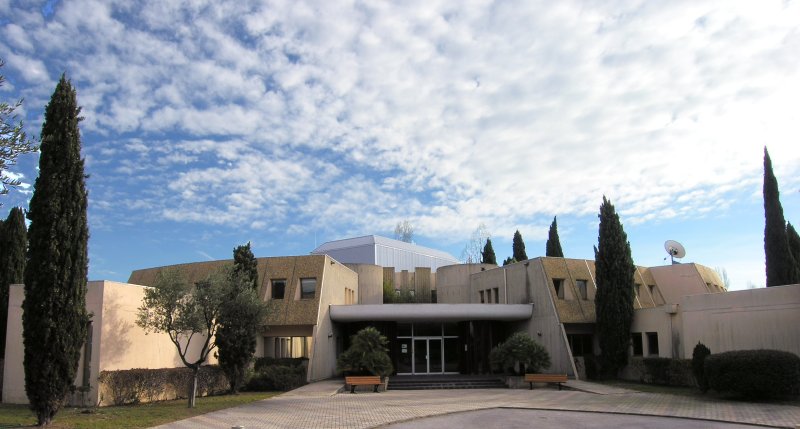
French national supercomputing and digital archiving centre in Montpellier.Supercomputer centre · Grid power · 1980