
Ohio Supercomputer Center
Statewide high performance computing resource for research and education in Ohio.
The Ohio Supercomputer Center (OSC) is a supercomputing facility on the Ohio State University campus near Columbus. Established in 1987, it provides high performance computing and cyberinfrastructure to universities, industries and government bodies across the state.
- Established in 1987 as a statewide resource
- Hosts Pitzer and Owens computing clusters
- Located on Ohio State University campus
- Supports bioscience and materials research
- Connects via OARnet network
What it is
The Ohio Supercomputer Center operates as a central hub for advanced computational resources in the state. Located on the western edge of the Ohio State University campus north of Columbus, it serves academic researchers, private industry partners and state agencies. The facility offers high performance computing clusters, massive storage systems and educational programmes in computational science. It functions as a member organisation within the Ohio Technology Consortium, which acts as the technology division for the state higher education department.
How it came about
State officials created the centre in 1987 to help local universities and businesses lead in computational research. That same year, the networking initiative now called OARnet connected users to the first Cray supercomputer. In 1988, the Industrial Interface Program launched to support commercial users, with Battelle Memorial Institute becoming the first client. Engineers installed a Cray Y-MP8/864 system in late 1989 for 22 million dollars. This seven-ton machine was briefly the fastest in the world. Educational outreach began with a summer institute for high school students in 1989, expanding to include young women in 2000.
The building and the halls
The facility sits on university land just north of Columbus. While specific architectural details are not detailed, it houses large-scale computing hardware. The infrastructure supports thousands of processor cores and significant memory capacity across multiple clusters. Security and physical design align with the needs of a major research institution hosting sensitive data and expensive equipment. The site integrates with the broader campus environment while maintaining dedicated space for its server rooms and support operations.
Power and cooling
The centre draws electricity from the standard grid to run its extensive hardware. Cooling relies on traditional air methods to manage heat from dense server racks. Power capacity figures are not publicly specified in the available records. The facility manages energy use through efficient hardware selection, such as Intel Xeon processors and NVIDIA GPUs. Backup power and redundancy measures are implied by the critical nature of the research hosted, though specific details on generators or fuel sources are not provided.
What runs inside
Researchers in biosciences, advanced materials and energy sectors use the systems for complex simulations. Industry partners access resources through the AweSim engagement programme. State government bodies also utilise the infrastructure for data analysis. Students benefit from summer STEM institutes and academic courses. The centre supports both central processing unit tasks and graphics processing unit accelerated workloads. Storage systems provide petabytes of space for active data and tape backups for long-term archival.
The place
Columbus was chosen due to its status as the state capital and home to a major research university. The location provides proximity to academic talent and state government decision-makers. Being part of the Ohio Technology Consortium links the centre to a wider network of educational institutions. The urban setting on a university campus facilitates collaboration between faculty, students and visiting industrial scientists. This positioning helps maintain Ohio’s competitiveness in technology and scientific discovery.
Environment and impact
The centre supports economic growth by providing industries with tools that might otherwise be unaffordable. It enhances educational outcomes by giving students hands-on experience with supercomputers. Environmental impacts are managed through standard institutional practices, though specific green initiatives are not highlighted. The facility creates skilled jobs in technical support and system administration. It contributes to the state’s reputation in scientific research, attracting grants and partnerships that benefit the local economy.
Network and links
OARnet provides the primary network connection, linking the centre to other research and education networks. This fibre optic infrastructure allows high-speed data transfer for collaborators across the state and nation. The initial network setup in 1987 laid the groundwork for modern digital connectivity. Users can move large datasets efficiently between local storage and remote partners. The network supports the distributed nature of modern scientific collaboration.

Questions people ask about Ohio Supercomputer Center
Who can use the Ohio Supercomputer Center?
The centre serves researchers at Ohio universities, employees of private industries and state government staff. It also offers educational programmes for high school students and undergraduates interested in STEM fields.
What kind of computers does the centre have?
It operates the Pitzer and Owens clusters, which use thousands of Intel CPU cores and NVIDIA GPU accelerators. These systems handle large-scale simulations and data analysis tasks for various scientific disciplines.
How is the centre funded?
Funding comes from the Ohio Department of Higher Education through state operating and capital budgets approved by the General Assembly. This public support ensures access for academic and state entities.
Good reading and sources
The facts on this page come from the Wikipedia article "Ohio Supercomputer Center", written by its contributors and used under the CC BY-SA 4.0 licence, and from its Wikidata record (CC0). EveryDatacenter rewrote the text in its own words, with AI assistance, and compares every page with the article to make sure no passage is copied. It may be reused under the same CC BY-SA 4.0 licence with a link back.
It may contain mistakes, and figures change over time. Nothing here is investment or buying advice. If something is wrong, tell us. Last refreshed 2026-11-14.
Like Ohio Supercomputer Center
All supercomputer centres 🇺🇸 United StatesCornell University Center for Advanced Computing
High performance computing and research centre at Cornell UniversitySupercomputer centre · Grid power · 1985
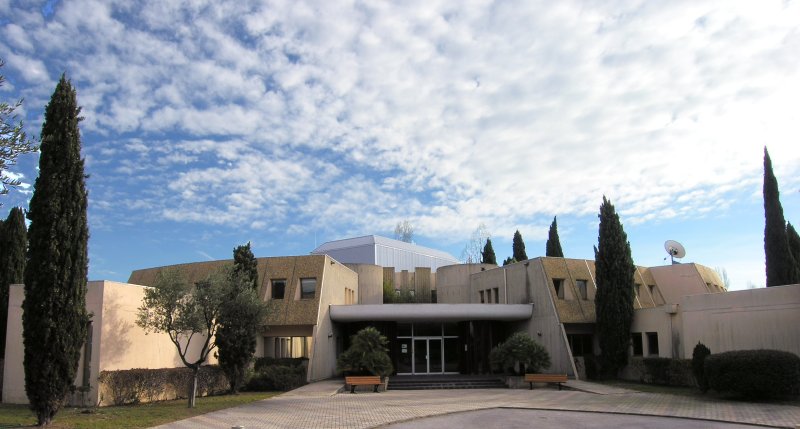 🇫🇷 FranceCINES
French national supercomputing and digital archiving centre in Montpellier.Supercomputer centre · Grid power · 1980
 🇨🇭 SwitzerlandSwiss National Supercomputing Centre
The national high-performance computing facility for Swiss research.Supercomputer centre · Grid power · 1992
 🇺🇸 United StatesNational Energy Research Scientific Computing Center
A US Department of Energy supercomputer facility for scientific research.Supercomputer centre · Grid power · 1974