
Arctic Region Supercomputing Center
UAF research computing centre serving Arctic science, 1993 to 2015
A high-performance computing and data storage facility run by the University of Alaska Fairbanks from 1993 until it closed on 1 September 2015. It served university and State of Alaska researchers, and for nearly two decades it was one of six supercomputing centres funded by the US Department of Defense modernisation programme.
- Founded 1993 at the University of Alaska Fairbanks; closed 1 September 2015
- One of six DoD Supercomputing Resource Centers from 1993 through 2011
- Placed 251st on the very first Top 500 list in June 1993 with the Cray Y-MP Denali
- Held a Top 500 ranking continuously for more than ten years
- Tape storage passed 3 petabytes in 2007; later servers held 7 petabytes
What it is
The Arctic Region Supercomputing Center, known as ARSC, was a computing facility on the campus of the University of Alaska Fairbanks. Between 1993 and 2015 it supplied high-performance computing power and large-scale data storage to scientists at the university and across the State of Alaska. Its work centred on northern latitude science: weather modelling for the Arctic, forecasts of summer wildfire smoke over Alaska, studies of frozen ocean surfaces and polar oceanography, prediction of ash clouds from eruptions, and modelling of tsunami waves. The centre also served the United States Department of Defense as one of six designated supercomputing resource centres.
How it came about
ARSC opened in 1993 and joined the Department of Defense High Performance Computing Modernization Program that same year, first as a Distributed Center, then as an Allocated Distributed Center, and later as one of six DoD Supercomputing Resource Centers, a role it held through 2011. Its machines repeatedly placed on the Top 500 ranking of the world's fastest computers, holding a listing continuously for more than a decade. A December 2010 newspaper report warned that most of the 46 staff faced redundancy once the defence contract ended, noting that 95 percent of funding came from that source. Staff numbers fell to half by 2012 and to a fifth by the end of 2014. The centre closed on 1 September 2015.
The building and the halls
ARSC sat within the University of Alaska Fairbanks campus in Fairbanks, at coordinates 64.8600 north, 147.8491 west. The C.T. Elvey Building is recorded as a former home of the centre. Alongside its compute halls it ran visualisation laboratories, a video production facility, and a Cave automatic virtual environment installed in 2004 using a Mechdyne MD Flying Flex 4 projector and two Sun Fire 6800 storage servers. Around 30 administrative staff are listed for the facility.
Power and cooling
No power capacity, energy source or cooling arrangement for the building is recorded. The centre's machines grew steadily in scale: early Cray systems ran on a handful of processors, while later clusters reached thousands of cores. Storage expanded from a 1.1 TB silo in 1993 to tape libraries holding more than 3 petabytes by 2007, and individual servers offering 7 petabytes of capacity by 2010. Funding came mainly from the Department of Defense programme, with additional support from the university and outside awards including National Science Foundation grants.
What runs inside
Compute time and storage were offered to researchers at the University of Alaska Fairbanks and to State of Alaska research groups. Projects focused on the Earth's far north, covering atmospheric and ocean modelling, smoke and ash forecasting, and tsunami work. Defence users also drew on the facility through the HPCMP. After the defence contract ended, the Chugach machine was still operated remotely during a handover, and its running passed to an Open Research Systems unit at the ERDC centre.
The place
Fairbanks, Alaska, sits at high latitude, which suits research on Arctic climate and ocean systems. The centre was placed on the university campus, close to the researchers it served. Its arrival and two decades of operation supported computing work across the state, and the loss of the defence contract in 2011 put most of its posts at risk.
Environment and impact
The centre's future was shaped by its funding base. A local newspaper reported in December 2010 that roughly 95 percent of its money came from the Department of Defense, and that the end of that contract the following year would cost most of the 46 staff their jobs. Headcount did fall, to about half by 2012 and to a fifth by late 2014. When ARSC closed, its remaining systems passed to a research computing group at the university.
Questions people ask about Arctic Region Supercomputing Center
What did the Arctic Region Supercomputing Center do?
It gave high-performance computing time and mass storage to researchers at the University of Alaska Fairbanks and across the State of Alaska. Much of that work studied the Earth's Arctic region, including weather, ocean, smoke, ash and tsunami modelling.
Who paid for it?
Most money came from the Department of Defense High Performance Computing Modernization Program. The university and outside awards, including National Science Foundation grants, added to that. A 2010 report put the defence share at 95 percent.
Why did it close?
The Department of Defense contract ended in 2011, and the centre could no longer fund machines fast enough for the Top 500 list. Staff shrank over the following years and the centre ceased to exist on 1 September 2015.
What happened to its computers?
The Cray XE6 called Chugach was moved to Vicksburg and run remotely, then handed to an Open Research Systems unit at the ERDC centre. Remaining ARSC systems were taken over by the Research Computing Systems group at the university's Geophysical Institute.
Good reading and sources
The facts on this page come from the Wikipedia article "Arctic Region Supercomputing Center", written by its contributors and used under the CC BY-SA 4.0 licence, and from its Wikidata record (CC0). EveryDatacenter rewrote the text in its own words, with AI assistance, and compares every page with the article to make sure no passage is copied. It may be reused under the same CC BY-SA 4.0 licence with a link back.
It may contain mistakes, and figures change over time. Nothing here is investment or buying advice. If something is wrong, tell us. Last refreshed 2026-11-14.
Like Arctic Region Supercomputing Center
All supercomputer centres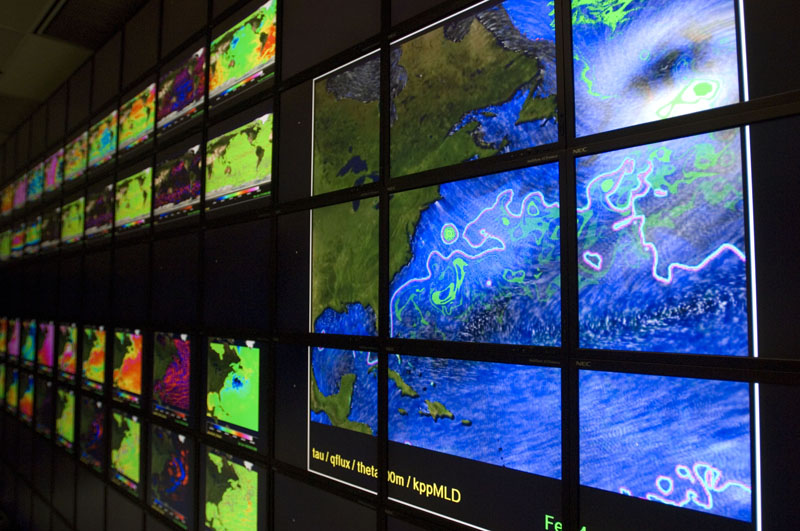 🇺🇸 United StatesNASA Advanced Supercomputing Division
NASA's supercomputing centre at Ames Research Center in Mountain View, California.Supercomputer centre · Grid power · 1982
🇺🇸 United StatesMultiprogram Research Facility
Classified NSA supercomputer centre at Oak Ridge National LaboratorySupercomputer centre · Grid power · 2006
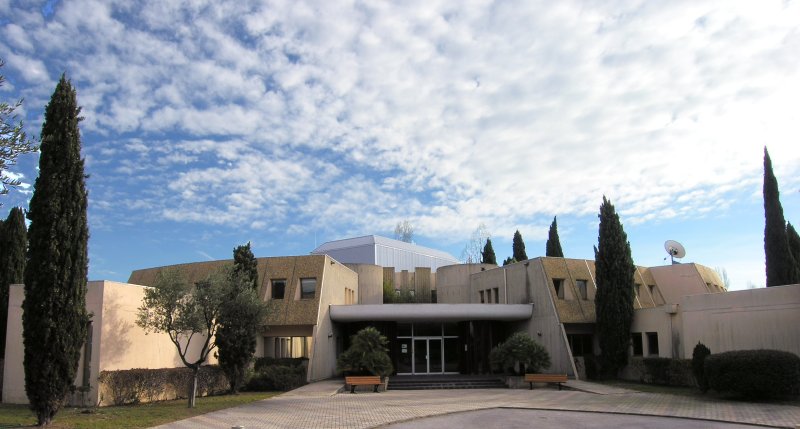 🇫🇷 FranceCINES
French national supercomputing and digital archiving centre in Montpellier.Supercomputer centre · Grid power · 1980