Minnesota Supercomputing Institute
High-performance computing facility at the University of Minnesota
The Minnesota Supercomputing Institute (MSI) is a research facility at the University of Minnesota in Minneapolis. Established in 1984, it provides high-performance computing hardware and support to university faculty and researchers across the state.
- First US university to acquire a supercomputer in 1981
- Institute established in 1984 to support research
- Operates the Agate HPC cluster with AMD and Nvidia hardware
- Located in Walter Library on the Twin Cities campus
What it is
The Minnesota Supercomputing Institute serves as a central research facility for the University of Minnesota. Based in Minneapolis, it offers high-performance computing hardware, software tools, and technical assistance. The institute supports faculty members and researchers from the university as well as other higher education institutions within the state. It operates under the Research Computing division of the Research and Innovation Office.
How it came about
The University of Minnesota made history in 1981 by becoming the first American university to purchase a Cray-1 supercomputer. Following this acquisition, the Minnesota Supercomputing Institute was formally established in 1984. Its creation aimed to provide dedicated high-performance computing resources to the academic research community. Today, it functions as part of a broader umbrella organization that includes U-Spatial and the Data Science Initiative.
The building and the halls
The institute is housed within Walter Library on the Twin Cities campus of the University of Minnesota. This urban setting places the computing facilities directly within the academic heart of the university. The location allows for close integration with library resources and other research departments. Specific details regarding the physical floor area or security infrastructure of the server rooms are not provided in the available records.
Power and cooling
Information regarding the specific power capacity, energy sources, or cooling methods used by the facility is not detailed in the provided material. The institute currently operates one high-performance computing cluster named Agate. This system utilizes nodes equipped with processors from HPE and AMD, alongside graphics processing units from Nvidia. No data on power usage effectiveness or renewable energy contributions is available.
What runs inside
The primary users of the institute are faculty and researchers from the University of Minnesota. It also extends its services to scholars at other colleges and universities across Minnesota. The facility supports scientific computation and data-intensive research projects. It does not appear to serve commercial tenants or public cloud customers, focusing instead on academic and scientific discovery needs.
The place
Located in Minneapolis, the institute benefits from its position on a major university campus. The urban environment provides access to academic talent and infrastructure. The choice of location within Walter Library integrates computing resources with traditional research materials.
Environment and impact
The institute plays a key role in supporting academic research across the state. By providing access to advanced computing tools, it enables complex scientific simulations and data analysis. It maintains memberships in several professional groups, including the Coalition for Academic Scientific Computation and the Great Lakes Consortium. These affiliations help facilitate collaboration and resource sharing among research institutions.
Network and links
The institute participates in the Extreme Science and Engineering Discovery Environment. This membership suggests connectivity to national research networks. It is also part of the Great Lakes Consortium, which may involve regional network collaborations.
Questions people ask about Minnesota Supercomputing Institute
When was the Minnesota Supercomputing Institute founded?
The institute was created in 1984. This followed the university's acquisition of a Cray-1 supercomputer in 1981, which was the first such machine owned by a U.S. university.
What computing resources does MSI currently offer?
MSI currently operates one high-performance computing cluster called Agate. This system features nodes with HPE and AMD central processing units as well as Nvidia graphics processing units.
Who can use the facilities at the Minnesota Supercomputing Institute?
The institute provides resources and technical support to faculty and researchers at the University of Minnesota. It also serves researchers from other higher education institutions located within the state of Minnesota.
Good reading and sources
The facts on this page come from the Wikipedia article "University of Minnesota Supercomputing Institute", written by its contributors and used under the CC BY-SA 4.0 licence, and from its Wikidata record (CC0). EveryDatacenter rewrote the text in its own words, with AI assistance, and compares every page with the article to make sure no passage is copied. It may be reused under the same CC BY-SA 4.0 licence with a link back.
It may contain mistakes, and figures change over time. Nothing here is investment or buying advice. If something is wrong, tell us. Last refreshed 2026-11-14.
Like Minnesota Supercomputing Institute
All supercomputer centres 🇺🇸 United StatesCornell University Center for Advanced Computing
High performance computing and research centre at Cornell UniversitySupercomputer centre · Grid power · 1985
 🇺🇸 United StatesNational Center for Supercomputing Applications
High-performance computing and research centre at the University of Illinois.Supercomputer centre · 1986
 🇺🇸 United StatesOhio Supercomputer Center
Statewide high performance computing resource for research and education in Ohio.Supercomputer centre · Grid power · 1987
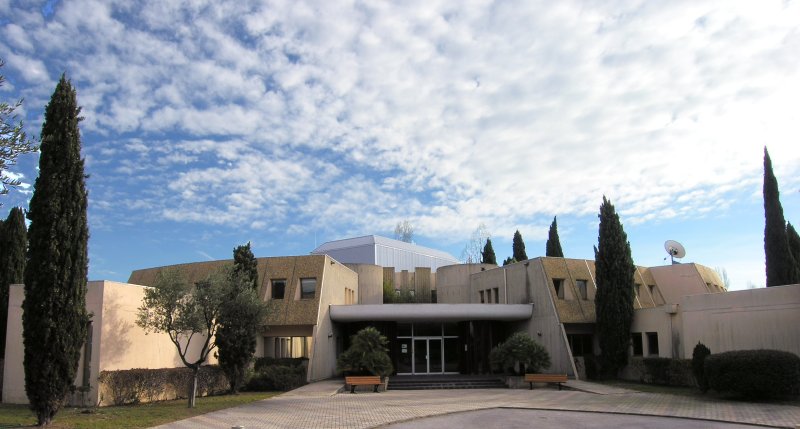 🇫🇷 FranceCINES
French national supercomputing and digital archiving centre in Montpellier.Supercomputer centre · Grid power · 1980