
National Center for Computational Sciences
US Department of Energy high-performance computing facility at Oak Ridge.
The National Center for Computational Sciences operates the Oak Ridge Leadership Computing Facility. Established in 1992, it provides supercomputing resources for scientific research in climate, materials, and astrophysics. The center hosts flagship systems like Summit and Frontier to solve complex global problems.
- Established in 1992 under the High-Performance Computing Act.
- Hosted the world's fastest computer, Jaguar, from 2009 to 2010.
- Titan achieved 27 petaflops using hybrid CPU and GPU architecture.
- Frontier is the center's first exascale supercomputer system.
- Supports research in climate, astrophysics, and materials science.
What it is
This facility serves as a major hub for high-performance computing in the United States. It is part of the Department of Energy and managed by Oak Ridge National Laboratory. The center supports scientists tackling large-scale challenges in fields such as climate modeling, astrophysics, and materials science. It houses the Oak Ridge Leadership Computing Facility, which provides access to some of the world's most powerful supercomputers. Users include researchers from universities, government agencies, and private industry who require massive computational power for their work.
How it came about
Congress passed the High-Performance Computing Act in late 1991, leading to the creation of this center. Oak Ridge National Laboratory received the award in May 1992, initially naming it the Center for Computational Sciences. The first system was an Intel Paragon with 5 gigaflops of performance. In 2004, new legislation tasked the center with building a petaflop-scale machine, and it adopted its current name. Georgia Tourassi became director in December 2019, succeeding James Hack. The facility has continuously upgraded its hardware, moving from early parallel processors to modern exascale systems.
The building and the halls
The center houses multiple specialized environments for computation and visualization. The EVEREST facility features a large PowerWall display with 27 projectors, offering high-resolution visual analysis for researchers. This setup allows scientists to explore complex data sets visually. The infrastructure includes extensive storage systems like Spider, which provides petabytes of disk space, and HPSS for archival tape storage. These components support the massive data throughput required by modern supercomputing applications.
Power and cooling
The facility has hosted a series of increasingly powerful supercomputers. Early systems included the Intel Paragon and IBM RS/6000 SP. Later, the Jaguar system reached petaflop speeds, followed by Titan, which combined CPUs and GPUs for greater efficiency. Titan was retired in 2019 to make way for Frontier, the center's first exascale system. The current flagship, Summit, uses IBM AC922 architecture. These systems require advanced data management tools to handle the immense volume of calculations and information processing.
What runs inside
Scientists use these resources for simulations that are too large for standard computers. Projects span combustion studies, fusion energy research, and high-energy physics. The center supports tool development and application porting through systems like Eos. Visualization clusters help researchers interpret results from large-scale jobs. The facility promotes collaboration between national laboratories and university partners, providing millions of processor-hours annually for staff and external collaborators working on critical scientific questions.
The place
Located at Oak Ridge National Laboratory in Tennessee, the center benefits from its integration with a major federal research institution. This location provides access to a deep pool of scientific expertise and technical support. The site was chosen as part of a national initiative to distribute high-performance computing capabilities across the country. It serves as a key node in the nation's scientific infrastructure, supporting work that has global implications for energy, environment, and security.
Environment and impact
The center enables breakthroughs in science by providing access to computing power that would otherwise be unavailable. It supports the development of new technologies and scientific understanding in areas critical to national interests. By hosting leadership-class facilities, it attracts top researchers and fosters innovation. The transition to exascale computing with Frontier represents a significant leap in capability, allowing for more detailed and realistic simulations of natural phenomena.
Network and links
The facility utilizes high-speed interconnects such as Cray’s Gemini network and InfiniBand clusters. Systems like Ewok and Hawk were designed for low-latency communication and high-bandwidth data transfer. The Spider file system ensures rapid data movement across thousands of clients. These networking capabilities are essential for coordinating the hundreds of thousands of processor cores used in modern supercomputing tasks.
Questions people ask about National Center for Computational Sciences
Who operates the National Center for Computational Sciences?
Oak Ridge National Laboratory manages the center on behalf of the United States Department of Energy. It functions as a user facility for scientists across the country.
What was the first supercomputer at the center?
The Intel Paragon XP/S 5 was installed in 1992. It had a peak performance of 5 gigaflops and was used for code development and early computational research projects.
What is the purpose of the OLCF?
The Oak Ridge Leadership Computing Facility helps researchers solve complex scientific problems. It provides access to leading high-performance computing resources and expertise in scientific computing.
When did Titan stop operating?
Titan was decommissioned in August 2019. It served for seven years and was removed to create space for the construction and installation of the Frontier exascale system.
Good reading and sources
- National Center for Computational Sciences on WikipediaEncyclopedia
- More photos on Wikimedia CommonsPhotos
- Wikidata recordOpen data
The facts on this page come from the Wikipedia article "National Center for Computational Sciences", written by its contributors and used under the CC BY-SA 4.0 licence, and from its Wikidata record (CC0). EveryDatacenter rewrote the text in its own words, with AI assistance, and compares every page with the article to make sure no passage is copied. It may be reused under the same CC BY-SA 4.0 licence with a link back.
It may contain mistakes, and figures change over time. Nothing here is investment or buying advice. If something is wrong, tell us. Last refreshed 2026-11-14.
Like National Center for Computational Sciences
All supercomputer centres 🇺🇸 United StatesArctic Region Supercomputing Center
UAF research computing centre serving Arctic science, 1993 to 2015Supercomputer centre · Grid power · 1993
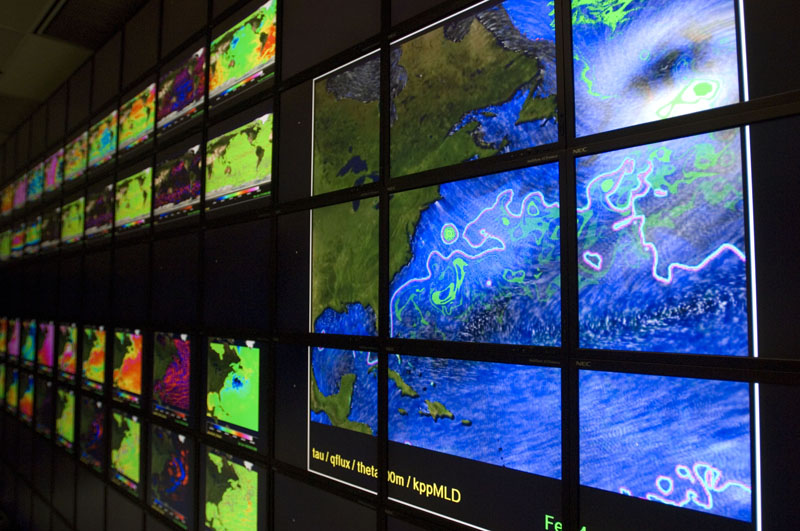 🇺🇸 United StatesNASA Advanced Supercomputing Division
NASA's supercomputing centre at Ames Research Center in Mountain View, California.Supercomputer centre · Grid power · 1982
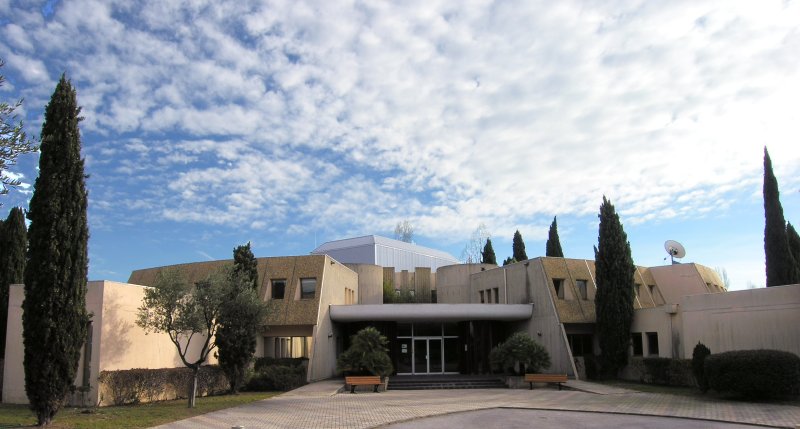 🇫🇷 FranceCINES
French national supercomputing and digital archiving centre in Montpellier.Supercomputer centre · Grid power · 1980
More from United States Department of Energy
All of them 🇺🇸 United StatesNational Energy Research Scientific Computing Center
A US Department of Energy supercomputer facility for scientific research.Supercomputer centre · Grid power · 1974
🇺🇸 United StatesNational Institute for Computational Sciences
Academic supercomputing centre at Oak Ridge National LaboratorySupercomputer centre