Air cooling
Computer room air conditioners and hot and cold aisles. 84 data centres on EveryDatacenter so far.
Air cooling is the classic way of cooling a data centre. Computer room air conditioners (CRACs) or air handlers (CRAHs) blow cold air through a raised floor or overhead ducts to the front of the racks, and fans in the servers push it out of the back. Most halls built before AI still work this way, and air can handle racks of up to about 20 to 30 kW.
Hot and cold aisles
Racks are set in rows facing each other, so the fronts share a cold aisle and the backs share a hot aisle. Doors or roofs over one of the aisles stop hot and cold air from mixing, which saves a lot of energy. ASHRAE, the US heating and cooling engineers' society, recommends server inlet air between 18 and 27 °C, and many operators now run at the warm end to save power.
Where air reaches its limits
A typical air-cooled rack draws 5 to 15 kW. AI racks of 100 kW and more give off too much heat for air alone, since air carries far less heat than water. Many older halls are being refitted with rear-door heat exchangers or liquid loops, and new AI buildings are designed with liquid from the start, keeping air only for storage, networking and general servers.
Famous air cooling data centres


Still to be written: 111 Eighth Avenue.
Further reading
 🇺🇸 United StatesNational Energy Research Scientific Computing Center
A US Department of Energy supercomputer facility for scientific research.Supercomputer centre · Grid power · 1974
 🇺🇸 United StatesCornell University Center for Advanced Computing
High performance computing and research centre at Cornell UniversitySupercomputer centre · Grid power · 1985
🇺🇸 United StatesMultiprogram Research Facility
Classified NSA supercomputer centre at Oak Ridge National LaboratorySupercomputer centre · Grid power · 2006
🇿🇦 South AfricaCentre for High Performance Computing
South Africa's national supercomputing facility for research and industry.Supercomputer centre · Grid power · 2007
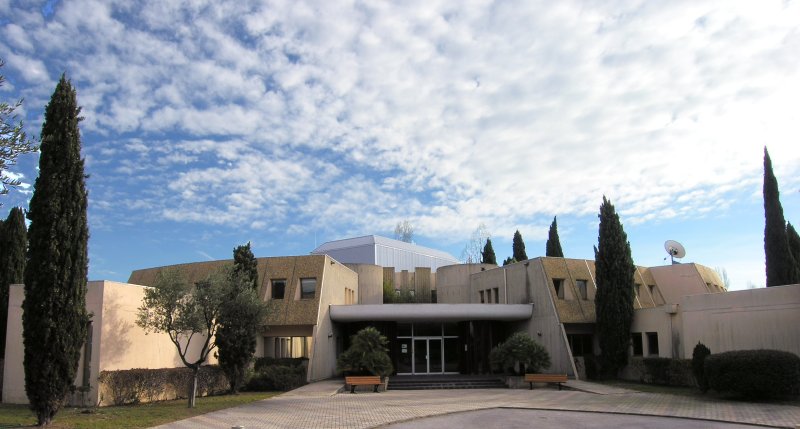 🇫🇷 FranceCINES
French national supercomputing and digital archiving centre in Montpellier.Supercomputer centre · Grid power · 1980
 🇺🇸 United StatesOhio Supercomputer Center
Statewide high performance computing resource for research and education in Ohio.Supercomputer centre · Grid power · 1987
Photo credits on this page
The small pictures above come from Wikimedia Commons under free licences. Some are cropped to fit.
- National Energy Research Scientific Computing Center: U.S. Department of Energy, Public domain, source
- Cornell University Center for Advanced Computing: Dcg588, CC0, source
- CoreSite: Droppyboy, CC0, source
- CINES: No machine-readable author provided. Penalva assumed (based on copyrig, Public domain, source
- Ohio Supercomputer Center: Ohio Supercomputer Center, CC BY-SA 3.0, source
- Equinix: Equinix, Inc., CC BY-SA 4.0, source