Air cooling
Computer room air conditioners and hot and cold aisles. 84 data centres on EveryDatacenter so far.
Air cooling is the classic way of cooling a data centre. Computer room air conditioners (CRACs) or air handlers (CRAHs) blow cold air through a raised floor or overhead ducts to the front of the racks, and fans in the servers push it out of the back. Most halls built before AI still work this way, and air can handle racks of up to about 20 to 30 kW.
Hot and cold aisles
Racks are set in rows facing each other, so the fronts share a cold aisle and the backs share a hot aisle. Doors or roofs over one of the aisles stop hot and cold air from mixing, which saves a lot of energy. ASHRAE, the US heating and cooling engineers' society, recommends server inlet air between 18 and 27 °C, and many operators now run at the warm end to save power.
Where air reaches its limits
A typical air-cooled rack draws 5 to 15 kW. AI racks of 100 kW and more give off too much heat for air alone, since air carries far less heat than water. Many older halls are being refitted with rear-door heat exchangers or liquid loops, and new AI buildings are designed with liquid from the start, keeping air only for storage, networking and general servers.
Famous air cooling data centres


Still to be written: 111 Eighth Avenue.
Further reading
 🇺🇸 United StatesNational Energy Research Scientific Computing Center
A US Department of Energy supercomputer facility for scientific research.Supercomputer centre · Grid power · 1974
 🇺🇸 United StatesDataBank DFW1
Historic bank building in Dallas converted into a flagship data centre.Colocation · Grid power · 1921
 🇺🇸 United StatesLandmark Center
Mixed-use complex with a data centre and hotel in Omaha.Colocation · Grid power · 1990
 🇺🇸 United StatesEquinix Infomart
Major carrier hotel and data centre campus in Dallas, Texas.Colocation · Grid power · 1985
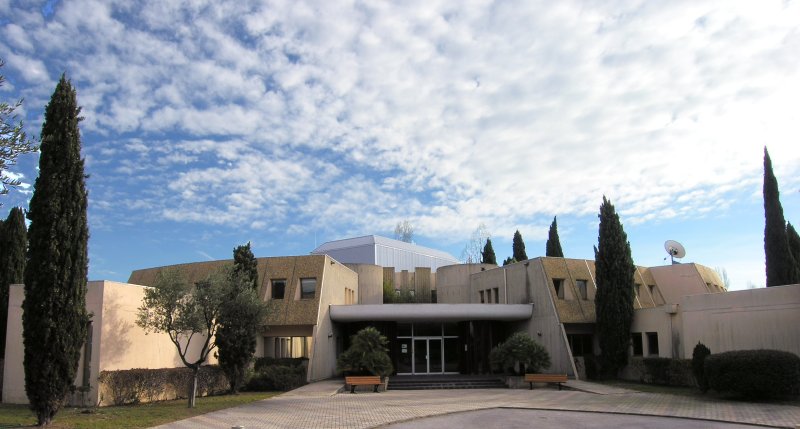 🇫🇷 FranceCINES
French national supercomputing and digital archiving centre in Montpellier.Supercomputer centre · Grid power · 1980
 🇺🇸 United StatesGlobe Building
Historic Art Deco office and data centre in St. Louis.Colocation · Grid power · 1932
🇺🇸 United States and 4 moreHostDime
Global data centre and cloud infrastructure providerColocation · Grid power · 2001
🇺🇸 United StatesMultiprogram Research Facility
Classified NSA supercomputer centre at Oak Ridge National LaboratorySupercomputer centre · Grid power · 2006
🇿🇦 South AfricaCentre for High Performance Computing
South Africa's national supercomputing facility for research and industry.Supercomputer centre · Grid power · 2007
🇺🇸 United StatesSungard Availability Services
Former IT recovery and production services provider based in WayneColocation · Grid power · 1978
 🇺🇸 United States and 1 moreSwitch and Data
Network-neutral data centre operator acquired by Equinix in 2010Colocation · Grid power · 1998
 🇺🇸 United StatesCornell University Center for Advanced Computing
High performance computing and research centre at Cornell UniversitySupercomputer centre · Grid power · 1985
 🇺🇸 United StatesHP Performance Optimized Datacenter
Container-sized modular data centres shipped ready to run, built by HP.Edge · Grid power · 2008
 🇬🇧 United Kingdom and 1 moreLondon Internet Exchange
A UK-based internet exchange point facilitating network traffic peering.Interconnection · Grid power · 1994
 🇺🇸 United StatesOhio Supercomputer Center
Statewide high performance computing resource for research and education in Ohio.Supercomputer centre · Grid power · 1987
 🇺🇸 United StatesVoplex building
A decagonal office block in Perinton housing a Tier 4 data centre.Colocation · Grid power · 2008
 🇦🇺 Australia and 1 moreNextDC
Australian data centre operator and developer listed on the ASX.Operator · Grid power · 2010
🇺🇸 United StatesBryant Building
Historic Art Deco office tower repurposed as a carrier hotel data centre.Colocation · Grid power · 1930
🇳🇬 Nigeria and 2 moreMDXi
West African colocation network now part of EquinixColocation · Grid power · 2019
🇺🇸 United StatesMicrosoft Fairwater Wisconsin
AI supercomputer campus in Mount Pleasant, WisconsinAI campus · Grid power · 2025
🇿🇦 South AfricaNTT Johannesburg 1
Colocation data centre in Samrand, Johannesburg, South Africa.Colocation · Grid power · 2022
🇰🇪 KenyaAfrica Data Centres Nairobi
Tier III colocation facility in Nairobi with solar power and water-free cooling.Colocation · Grid power · 2013
🇳🇬 Nigeria and 1 moreOpen Access Data Centres
Pan-African carrier-neutral data centre operatorColocation · Grid power · 2021
🇭🇰 Hong KongAirTrunk HK1
Hyperscale data centre in Tsuen Wan, Hong KongHyperscale · Grid power · 2020
🇯🇵 JapanAirTrunk TOK1
Hyperscale data centre campus in Inzai, TokyoHyperscale · Grid power · 2021
🇮🇳 IndiaMicrosoft Hyderabad data centre campus
Microsoft cloud region in Hyderabad with three availability zones.Hyperscale · Grid power · 2022
🇨🇳 China and 2 moreChindata Group
Asian data centre operator with facilities in China, Malaysia and ThailandHyperscale · Grid power · 2015
🇮🇩 IndonesiaEDGE2 Jakarta
AI-ready data centre in downtown Jakarta with 23 MW capacity.Colocation · Grid power · 2024
🇬🇧 United KingdomProximity Data Centres
UK operator of edge colocation facilitiesEdge · Grid power · 2024
🇦🇪 United Arab EmiratesKhazna Data Centers
Hyperscale data centre operator in the United Arab EmiratesHyperscale · Grid power
🇳🇬 NigeriaRack Centre
Carrier-neutral data centre campus in Lagos, NigeriaColocation · Grid power · 2012
🇲🇽 Mexico and 4 moreKIO Networks
Mexican data centre operator with campuses across Latin America and Spain.Colocation · Grid power · 2021
🇮🇳 IndiaCtrlS Navi Mumbai campus
Hyperscale data centre campus in Navi Mumbai with renewable power.Hyperscale · Grid power
🇮🇳 IndiaCtrlS Chennai campus
Hyperscale data centre park in Ambattur, Chennai.Hyperscale · Grid power · 2025
🇮🇳 IndiaCtrlS Noida campus
Hyperscale data centre in Noida with solar power and liquid cooling.Hyperscale · Grid power
🇦🇺 AustraliaAirTrunk MEL1
Hyperscale data centre campus in Western Melbourne.Hyperscale · Grid power · 2017
🇯🇵 JapanNTT Tokyo Inzai campus
50 MW colocation campus in Shiroi City for AI and cloud workloads.Colocation · Grid power · 2027
🇮🇳 IndiaAdaniConneX Chennai 1
Hyperscale colocation facility in SIPCOT IT Park, Chennai.Hyperscale · Wind and solar
🇲🇾 MalaysiaMicrosoft Malaysia data centres
Two cloud regions in Malaysia for Azure and AI workloadsHyperscale · Grid power · 2025
🇮🇳 IndiaYotta G1
Colocation and cloud data centre in GIFT City, GujaratColocation · Grid power · 2024
🇮🇳 IndiaSTT GDC Kolkata campus
Two enterprise data centres in Kolkata, India, run by STT GDC.Colocation · Grid power · 2009
🇮🇳 IndiaSify Noida campus
Hyperscale and AI data centre campus in Noida, India.Hyperscale · Grid power
🇮🇳 IndiaNTT Chennai 2
Hyperscale data centre campus in Ambattur, ChennaiHyperscale · Grid power · 2025
🇮🇳 IndiaPrinceton Digital Group Mumbai campus
Hyperscale data centre campus in Navi Mumbai, IndiaHyperscale · Grid power · 2022
🇲🇽 MexicoODATA Querétaro campus
Four hyperscale data centres in Querétaro, MexicoHyperscale · Grid power · 2022
Photo credits on this page
The small pictures above come from Wikimedia Commons under free licences. Some are cropped to fit.
- National Energy Research Scientific Computing Center: U.S. Department of Energy, Public domain, source
- Voplex building: DanielPenfield, CC BY-SA 3.0, source
- Cornell University Center for Advanced Computing: Dcg588, CC0, source
- Landmark Center: JonClee86, CC BY-SA 3.0, source
- Switch and Data: Switch and Data, CC BY-SA 4.0, source
- HP Performance Optimized Datacenter: Raysonho @ Open Grid Scheduler / Grid Engine, CC BY-SA 3.0, source
- London Internet Exchange: John Arundel, CC BY-SA 3.0, source
- CoreSite: Droppyboy, CC0, source
- DataBank DFW1: Wamploid Cthulhuloid, CC BY 2.0, source
- Equinix Infomart: Photo: Andreas Praefcke, CC BY 3.0, source
- CINES: No machine-readable author provided. Penalva assumed (based on copyrig, Public domain, source
- Globe Building: Marcus Qwertyus, CC BY-SA 3.0, source
- Ohio Supercomputer Center: Ohio Supercomputer Center, CC BY-SA 3.0, source
- Equinix: Equinix, Inc., CC BY-SA 4.0, source
- NextDC: Samuel Wiki, CC0, source