City centre
Carrier hotels and colocation in the heart of a city. 220 data centres on EveryDatacenter so far.
City-centre data centres are usually carrier hotels and colocation buildings in old offices, telephone exchanges, printing plants and department stores. They were chosen for the fibre that already ran through the streets, not for cheap land or power. Space and power are tight, and rents are high, but these buildings are where networks, banks and content firms connect to each other.
Old buildings, new use
Many urban data centres reuse strong old buildings with high ceilings and heavy floors. Chicago's Lakeside Technology Center was the R.R. Donnelley printing plant; Newark's 165 Halsey Street was the Bamberger department store; Dallas's DataBank DFW1 occupies the old Federal Reserve Bank building; St Louis's Globe Building and Minneapolis's 511 Building are other examples. Tokyo's Otemachi and London's Docklands host newer urban towers.
Limits of the city
Cities rarely have spare grid capacity for new large halls, and planners worry about generator noise and diesel exhaust. Amsterdam, Frankfurt and Singapore now set rules on where data centres can go. So the city building handles interconnection and edge work, while big compute halls move to suburbs and rural campuses linked by fibre.
Famous city centre data centres
 60 Hudson StreetLower Manhattan carrier hotel
 165 Halsey StreetNewark department store turned carrier hotel
 DataBank DFW1Dallas data centre in the old Federal Reserve Bank
 Globe BuildingArt Deco office and data centre building
 Minnesota Technology CenterMinneapolis "most wired building", the 511 Building
 Westin Building ExchangeDowntown Seattle telecom hub
Still to be written: R.R. Donnelley and Sons Co. Calumet Plant.
Further reading
 🇪🇸 SpainBarcelona Supercomputing Center
Public research institute in Barcelona hosting the MareNostrum supercomputer.Supercomputer centre · Grid power · 2005
 🇺🇸 United StatesCornell University Center for Advanced Computing
High performance computing and research centre at Cornell UniversitySupercomputer centre · Grid power · 1985
 🇨🇳 ChinaNational Supercomputing Center in Guangzhou
Chinese national supercomputing centre in Guangzhou housing Tianhe-3.Supercomputer centre · Grid power · 2014
🇹🇷 TurkeyITU National Center for High Performance Computing
Turkish national HPC centre at Istanbul Technical University, running since 2004Supercomputer centre · 2004
 🇺🇸 United StatesNational Energy Research Scientific Computing Center
A US Department of Energy supercomputer facility for scientific research.Supercomputer centre · Grid power · 1974
 🇺🇸 United StatesMassachusetts Green High Performance Computing Center
University-run supercomputer centre in Holyoke, Massachusetts, powered mainly by hydroelectricity.Supercomputer centre · Hydro · 2012
🇮🇪 IrelandIrish Centre for High-End Computing
National supercomputing and training hub in IrelandSupercomputer centre · 2005
🇹🇼 TaiwanNational Center for High-Performance Computing
Taiwan's national hub for supercomputing and research networks.Supercomputer centre · 1993
🇿🇦 South AfricaCentre for High Performance Computing
South Africa's national supercomputing facility for research and industry.Supercomputer centre · Grid power · 2007
🇩🇪 GermanyGerman Climate Computing Centre
Hamburg centre running supercomputers for German climate and Earth system researchSupercomputer centre
 🇺🇸 United StatesNational Center for Supercomputing Applications
High-performance computing and research centre at the University of Illinois.Supercomputer centre · 1986
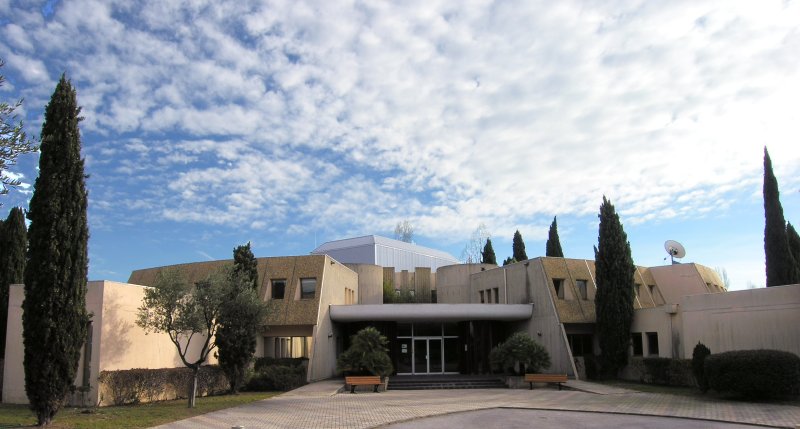 🇫🇷 FranceCINES
French national supercomputing and digital archiving centre in Montpellier.Supercomputer centre · Grid power · 1980
🇧🇬 BulgariaNational Center for Supercomputing Applications
Bulgarian state research facility for high-performance scientific computing.Supercomputer centre · 2008
 🇦🇺 AustraliaNational Computational Infrastructure
High-performance computing and data services at the Australian National University.Supercomputer centre · 2007
🇺🇸 United StatesNational Supercomputing Center for Energy and the Environment
A supercomputer centre at UNLV in Las Vegas focused on energy and environment research.Supercomputer centre · Grid power · 1989
 🇺🇸 United StatesTexas Advanced Computing Center
UT Austin's advanced computing research centre for science across the USSupercomputer centre · Grid power · 2001
🇨🇦 CanadaCLUMEQ
Quebec university consortium running shared supercomputers at McGill.Supercomputer centre · Grid power · 2001
 🇩🇪 GermanyHigh Performance Computing Center, Stuttgart
University of Stuttgart supercomputer centre running HPE Hawk and NEC clustersSupercomputer centre · 1995
 🇺🇸 United StatesOhio Supercomputer Center
Statewide high performance computing resource for research and education in Ohio.Supercomputer centre · Grid power · 1987
🇺🇸 United StatesMinnesota Supercomputing Institute
High-performance computing facility at the University of MinnesotaSupercomputer centre · 1984
 🇨🇭 SwitzerlandSwiss National Supercomputing Centre
The national high-performance computing facility for Swiss research.Supercomputer centre · Grid power · 1992
 🇪🇸 SpainCESGA
High performance computing centre in Santiago de CompostelaSupercomputer centre · 1993
 🇮🇹 ItalyCINECA
Italian supercomputing consortium for research and universitiesSupercomputer centre · 1969
🇬🇧 United KingdomResearch Computing Services
High performance computing group at the University of ManchesterSupercomputer centre · 2007
 🇨🇳 ChinaNational Supercomputing Center in Shenzhen
State supercomputing facility in Shenzhen serving science and industry.Supercomputer centre · 2009
Photo credits on this page
The small pictures above come from Wikimedia Commons under free licences. Some are cropped to fit.
- National Energy Research Scientific Computing Center: U.S. Department of Energy, Public domain, source
- Barcelona Supercomputing Center: Herodotptlomeu, CC BY-SA 4.0, source
- Cornell University Center for Advanced Computing: Dcg588, CC0, source
- National Supercomputing Center in Guangzhou: O01326, CC BY-SA 4.0, source
- Minnesota Technology Center: Gobonobo, CC BY-SA 3.0, source
- Massachusetts Green High Performance Computing Center: Simtropolitan, CC0, source
- DataBank DFW1: Wamploid Cthulhuloid, CC BY 2.0, source
- National Center for Supercomputing Applications: en:User:Ragib / Site , User:Ragib, CC BY 2.5, source
- CINES: No machine-readable author provided. Penalva assumed (based on copyrig, Public domain, source
- Globe Building: Marcus Qwertyus, CC BY-SA 3.0, source
- National Computational Infrastructure: Nick-D, CC BY-SA 3.0, source
- Texas Advanced Computing Center: UNM Research Data Services, CC BY-SA 2.0, source
- National Supercomputing Center in Shenzhen: 懒懒的天, CC BY-SA 4.0, source
- 165 Halsey Street: Hudconja, CC BY-SA 3.0, source
- High Performance Computing Center, Stuttgart: Julian Herzog ( Website ), CC BY 4.0, source
- Ohio Supercomputer Center: Ohio Supercomputer Center, CC BY-SA 3.0, source
- 60 Hudson Street: Beyond My Ken, CC BY-SA 4.0, source
- Seattle Internet Exchange: Wafwot at English Wikipedia, Public domain, source
- Swiss National Supercomputing Centre: CSCS, CC BY-SA 3.0, source
- CESGA: Johnander, CC BY-SA 4.0, source
- CINECA: Carlo Dani, CC BY-SA 4.0, source