🇺🇸 Data centres of the United States
134 data centres from the United States, best known first.
The United States hosts a vast private internet infrastructure that underpins the global network. Major providers dominate the market, focusing on broadband access rather than centralized data centre hubs. The sector faces ongoing challenges regarding rural connectivity and regulatory competition.
- ARPANET started the US internet in the 1960s under the Defense Department.
- AT&T, Comcast, Charter, and Verizon dominate the private ISP market.
- Only 43% of households had Tier 1 fibre access according to 2022 estimates.
- FCC raised broadband definition to 100 Mbit/s download in March 2024.
- Tribal lands often have the lowest internet access rates in the country.
Data centres in the United States
The US internet relies on private ownership of cables and towers. This structure creates local monopolies among large firms like AT&T and Comcast. The system supports hundreds of millions of users with high-speed connections. The focus remains on consumer access speeds and availability across different regions.
History
The network began as ARPANET in the 1960s under the Department of Defense. It evolved into the foundation for the modern worldwide internet. Early residential access used slow dial-up modems over telephone lines. Businesses adopted faster connections earlier than households. Broadband technology gradually replaced dial-up throughout the early twenty-first century. This shift allowed for continuous, always-on connectivity without monopolizing phone lines.
Where they are
Access varies significantly between states and urban versus rural areas. High penetration rates exist in developed countries comparisons, yet gaps remain. Some regions lack any broadband access entirely. Tribal lands often show the lowest access rates due to low financial returns for providers. Government subsidies attempt to bridge these gaps where private investment is insufficient. The market is fragmented, driven by profit motives rather than uniform public need.
Operators and clouds
Four major companies control most of the infrastructure market share. AT&T, Comcast, Charter, and Verizon hold dominant positions. This concentration allows for limited competition and fixed pricing strategies. Private ISPs own the fiber optics, cell towers, and satellite networks. The government does not own the underlying physical infrastructure. Small providers struggle against high entry costs and regulatory barriers set by larger incumbents.
Power and policy
It notes that laying fibre optic cable involves significant financial expense. Environmental impact regulations can delay deployment projects.
Today
Broadband definitions have increased to require higher download and upload speeds. Most adults now use the internet regularly via mobile devices. Fixed broadband penetration has reached significant levels in many areas. However, millions still lack access to adequate fixed broadband services. Regulatory efforts continue to address anti-competitive practices and rural deployment delays. Net neutrality principles remain a subject of political and legal contention.
The facts in this overview come from the Wikipedia article "Internet in the United States", written by its contributors and used under the CC BY-SA 4.0 licence. EveryDatacenter rewrote the text in its own words, with AI assistance, and compares every page with the article to make sure no passage is copied. It may be reused under the same CC BY-SA 4.0 licence with a link back.
 🇺🇸 United StatesWestin Building Exchange
Seattle carrier hotel with meet-me rooms and internet exchangesInterconnection · Hydro · 1981
🇺🇸 United StatesHolland Computing Center
High-performance computing core for the University of Nebraska system.Supercomputer centre
🇺🇸 United StatesThe Planet Internet Services
Houston dedicated server host, merged into SoftLayer in 2010Enterprise · 1998
🇺🇸 United StatesBryant Building
Historic Art Deco office tower repurposed as a carrier hotel data centre.Colocation · Grid power · 1930
🇺🇸 United StatesPAIX
Neutral internet exchange point in Palo Alto, California, running since 1996.Interconnection · 1996
🇺🇸 United StatesDetroit Internet Exchange
A nonprofit peering point in Southfield, Michigan where local networks swap traffic directly.Interconnection · 2014
🇺🇸 United StatesInternet Exchange of Puerto Rico
A peering point in San Juan where networks swap traffic locally.Interconnection · 2005
 🇺🇸 United StatesLandmark Center
Mixed-use complex with a data centre and hotel in Omaha.Colocation · Grid power · 1990
🇺🇸 United StatesMultiprogram Research Facility
Classified NSA supercomputer centre at Oak Ridge National LaboratorySupercomputer centre · Grid power · 2006
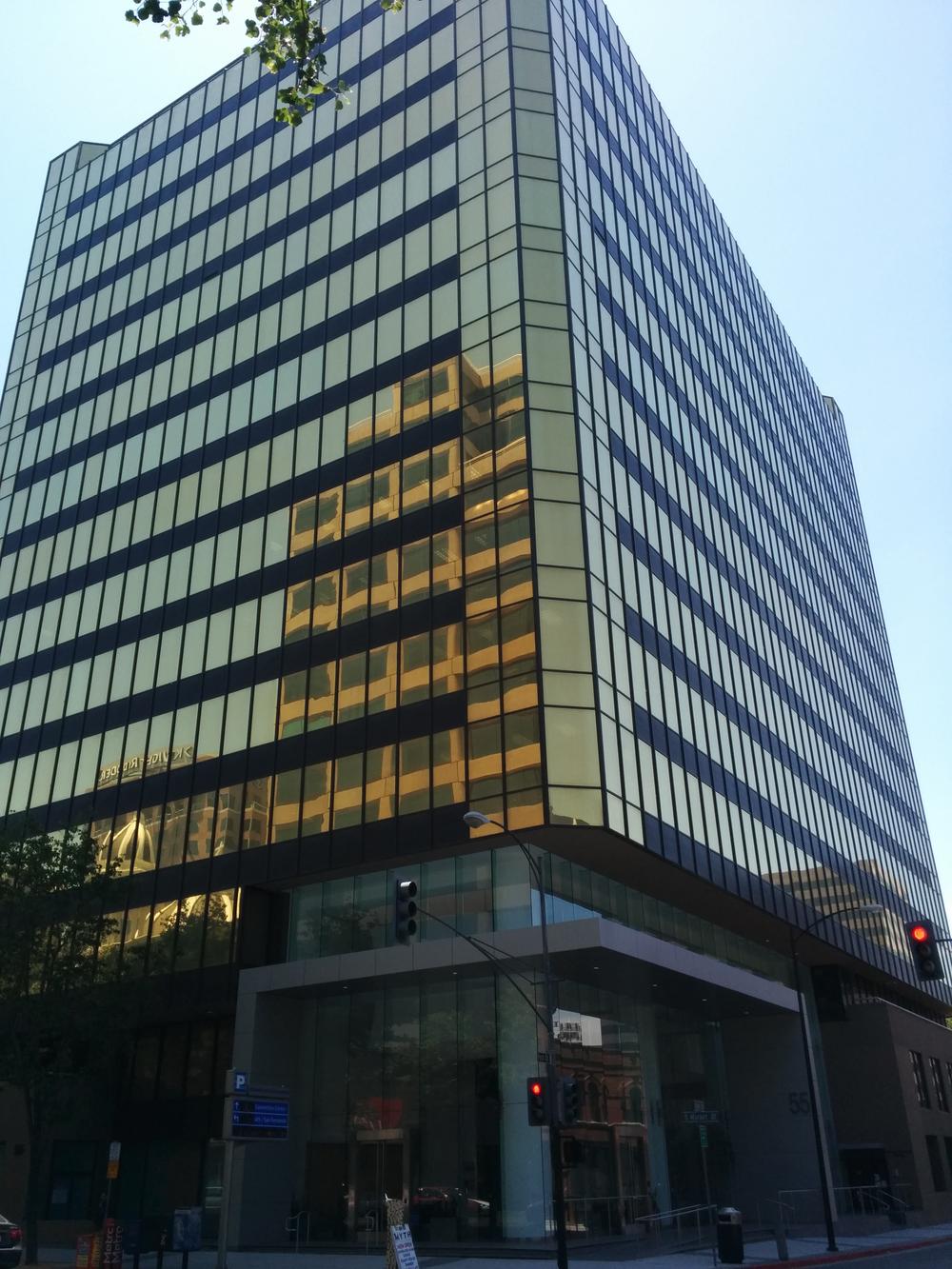 🇺🇸 United StatesTower 55
Carrier-neutral telecom hub and internet exchange in downtown San Jose.Interconnection · 1984
 🇺🇸 United States and 1 moreSwitch and Data
Network-neutral data centre operator acquired by Equinix in 2010Colocation · Grid power · 1998
🇺🇸 United StatesJohn von Neumann Center
One of five NSF national supercomputer centres, run at Princeton from 1985 to 1990.Supercomputer centre · 1985
🇺🇸 United StatesCenter for Computational Innovations
University supercomputing centre in Troy, New York, built with IBM and New York State.Supercomputer centre
🇦🇺 Australia and 2 moreIREN
AI cloud and Bitcoin mining operator based in SydneyHyperscale · Wind and solar · 2018
 🇺🇸 United StatesUtah Data Center
NSA data storage facility at Camp Williams, Utah, for intelligence community recordsGovernment · Grid power · 2013
 🇺🇸 United States and 1 moreCoreWeave
American GPU cloud operator running AI data centres in the US and EuropeAI campus · Grid power · 2017
 🇺🇸 United StatesHP Performance Optimized Datacenter
Container-sized modular data centres shipped ready to run, built by HP.Edge · Grid power · 2008
 🇬🇧 United Kingdom and 1 moreLondon Internet Exchange
A UK-based internet exchange point facilitating network traffic peering.Interconnection · Grid power · 1994
🇺🇸 United StatesMAE-West
A Silicon Valley internet exchange point running between downtown San Jose and Moffett Field.Interconnection · 1994
🇺🇸 United StatesFederal Internet Exchange
Two 1989 peering sites that joined U.S. federal research and defence networksInterconnection · 1989
🇺🇸 United StatesFibernet Corp.
Orem-based ISP and colocation firm running its own on-site data centre since 2002.Colocation · Grid power · 1994
🇺🇸 United StatesCore Scientific
US operator of data centres for AI, GPU cloud and colocationOperator · Wind and solar · 2017
🇺🇸 United StatesLunavi
US colocation and managed cloud provider, based in Cheyenne, WyomingColocation · Wind and solar · 2007
🇺🇸 United StatesXAI Colossus
A cluster of AI data centres in Memphis and Southaven for training large language models.AI campus · Gas
 🇺🇸 United States and 2 moreIron Mountain
Records storage and data centre operator with underground vaults and colocation sitesColocation · 1951
 🇺🇸 United StatesCoreSite
US operator of carrier-neutral data centres offering colocation and peeringColocation · Grid power · 2001
🇦🇪 United Arab Emirates and 4 moreG42
Emirati AI and data centre group running Khazna and Core42 from Abu DhabiAI campus · Grid power · 2018
🇺🇸 United StatesTeraWulf
US bitcoin mining operator running data centres in New York and PennsylvaniaMining site · Grid power · 2021
 🇺🇸 United States375 Pearl Street
A 32-storey Manhattan tower combining offices with a data centre and telephone exchange.Colocation · Grid power · 1976
🇺🇸 United StatesInternap
Global provider of data centre and cloud infrastructure services.Colocation · 1996
🇺🇸 United StatesDatapipe
Managed hosting and data centre operator acquired by Rackspace.Colocation · Wind and solar · 1998
🇺🇸 United StatesArea 71
Walmart's 125,000 sq ft data center in Jane, MissouriEnterprise · Grid power
 🇺🇸 United StatesMinnesota Technology Center
Colocation centre and internet exchange in downtown MinneapolisColocation · 1982
🇺🇸 United StatesOak Tower Data Center
Colocation facility in a historic Kansas City skyscraperColocation · 1920
 🇺🇸 United StatesIX-West
Historic Denver office building hosting an internet exchange pointInterconnection · 1910
 🇺🇸 United States100 Biscayne
Mixed-use skyscraper with a colocation data centre in MiamiColocation · 1965
🇺🇸 United StatesTerremark
Former data centre and IT services provider based in Miami.Colocation · 1980
 🇺🇸 United StatesMassachusetts Green High Performance Computing Center
University-run supercomputer centre in Holyoke, Massachusetts, powered mainly by hydroelectricity.Supercomputer centre · Hydro · 2012
🇺🇸 United StatesTelehouse America
US colocation and internet exchange operator owned by KDDIColocation · Grid power · 1987
🇺🇸 United StatesSavvis
Global colocation and managed hosting provider owned by Lumen Technologies.Colocation · 1995
🇩🇪 Germany and 3 moreHetzner
German web hosting and data centre operator founded in 1997.Colocation · Wind and solar · 1997
🇺🇸 United StatesShyh Wang Hall
Supercomputer facility at Lawrence Berkeley National LaboratorySupercomputer centre · 2015
 🇺🇸 United StatesNational Center for Computational Sciences
US Department of Energy high-performance computing facility at Oak Ridge.Supercomputer centre · 1992
🇺🇸 United StatesBoston Internet Exchange
A Boston peering point run by Markley Group at two of its data centresInterconnection · 2012
🇺🇸 United States and 4 moreHostDime
Global data centre and cloud infrastructure providerColocation · Grid power · 2001
 🇺🇸 United StatesDataBank DFW1
Historic bank building in Dallas converted into a flagship data centre.Colocation · Grid power · 1921
🇺🇸 United StatesHurricane Electric
Global ISP and colocation provider based in California.Colocation · 1994
 🇺🇸 United StatesNational Center for Supercomputing Applications
High-performance computing and research centre at the University of Illinois.Supercomputer centre · 1986
Photo credits on this page
The small pictures above come from Wikimedia Commons under free licences. Some are cropped to fit.
- Landmark Center: JonClee86, CC BY-SA 3.0, source
- Tower 55: JVittes, CC BY-SA 4.0, source
- Switch and Data: Switch and Data, CC BY-SA 4.0, source
- Utah Data Center: User:ParkerHiggins ( Electronic Frontier Foundation ), CC0, source
- CoreWeave: Wikideas1, CC0, source
- HP Performance Optimized Datacenter: Raysonho @ Open Grid Scheduler / Grid Engine, CC BY-SA 3.0, source
- London Internet Exchange: John Arundel, CC BY-SA 3.0, source
- Iron Mountain: Rmayer27310, CC BY-SA 4.0, source
- CoreSite: Droppyboy, CC0, source
- 375 Pearl Street: Jim.henderson, CC BY-SA 4.0, source
- Minnesota Technology Center: Gobonobo, CC BY-SA 3.0, source
- IX-West: Jeffrey Beall, CC BY-SA 3.0, source
- 100 Biscayne: Averette, CC BY 3.0, source
- Massachusetts Green High Performance Computing Center: Simtropolitan, CC0, source
- National Center for Computational Sciences: Carlos Jones/ORNL, CC BY 2.0, source
- DataBank DFW1: Wamploid Cthulhuloid, CC BY 2.0, source
- National Center for Supercomputing Applications: en:User:Ragib / Site , User:Ragib, CC BY 2.5, source
- Seattle Internet Exchange: Wafwot at English Wikipedia, Public domain, source